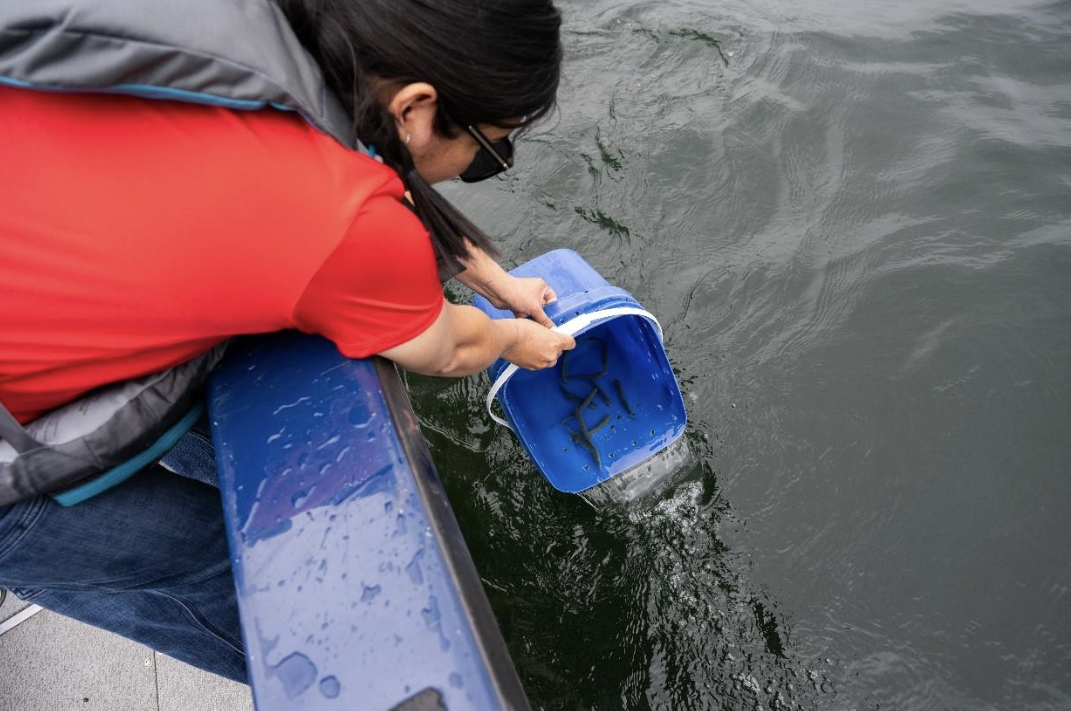
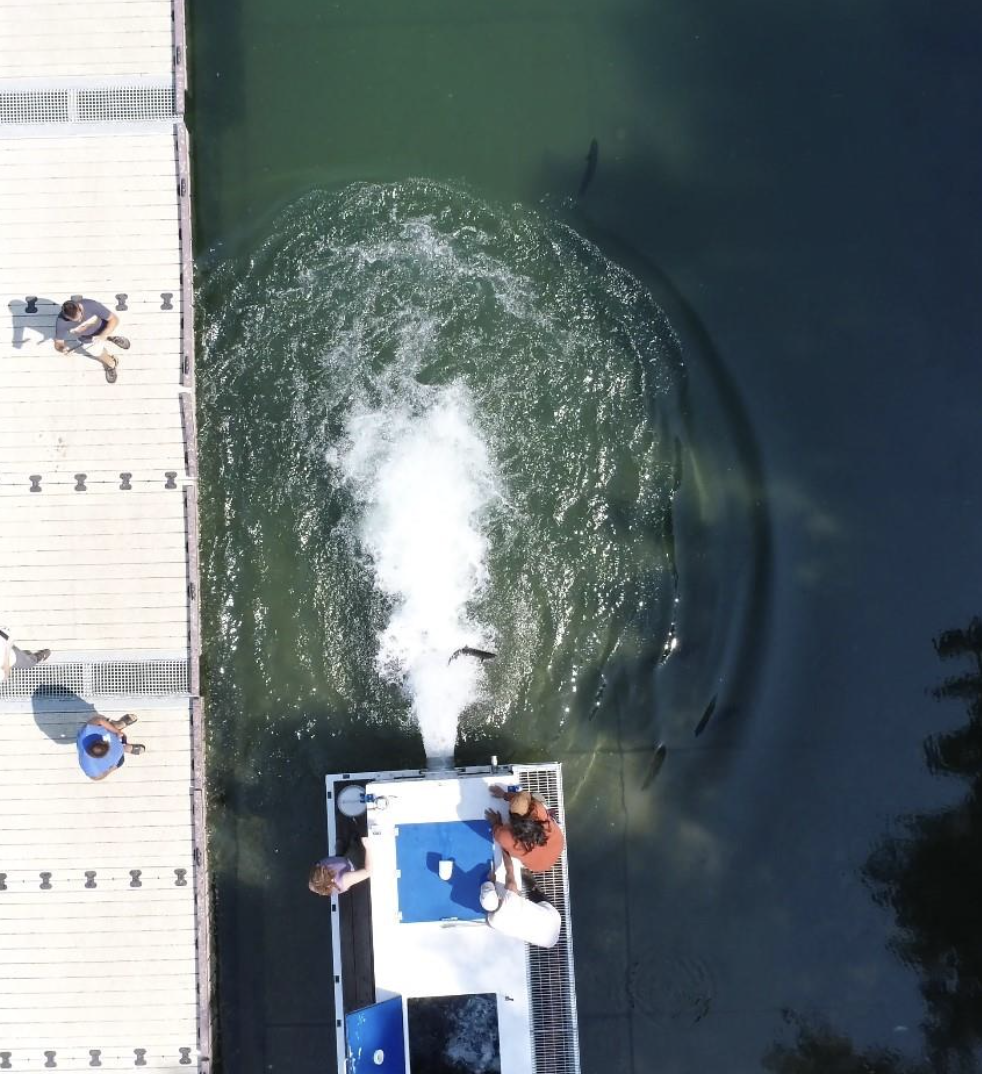
The Phase 2 Implementation Plan (P2IP) for salmon reintroduction is making significant progress. Last year, P2IP proponents implemented Chinook and sockeye juvenile outmigration behavior and survival studies using both acoustic and passive integrated transponder (PIT) tags. 2025 was the fourth year of juvenile yearling Chinook studies. In partnership with U.S. Geological Survey (USGS), Douglas Public Utilities District (PUD), and the state of Washington, the Colville Tribes, the Coeur d’Alene Tribe, and the Spokane Tribe reared and released approximately 2,000 Chinook with juvenile salmon acoustic system telemetry (JSATS) tags and 170,000 with PIT tags.
The eggs were sourced from Entiat National Fish Hatchery and reared to the fall parr stage by Douglas PUD at Wells Hatchery. Approximately 45,000 were released as fall parr in three locations in the blocked area and the remaining 120,000 were over-winter acclimated in net pens on Lake Roosevelt, Rufus Woods Lake, and at the Coeur d’Alene hatchery facility in Plummer, Idaho.
Last year was the first year of juvenile sockeye studies for the P2IP. In partnership with the Pacific Northwest National Laboratory (PNNL) and Chelan PUD, the tribes were able to capture and tag approximately 750 wild sockeye smolts at the Rocky Reach juvenile bypass and release them upstream of Grand Coulee Dam. The tribes and PNNL also collaborated on a hatchery sub yearling behavior and survival study by tagging and releasing nearly 11,000 juvenile sockeye in July, September, and October. The hatchery juvenile sockeye released in 2025 originated from brood collected on the Colville Tribe’s purse seine vessel in July 2024 and were reared at the PNNL aquaculture facility in Richland, WA.
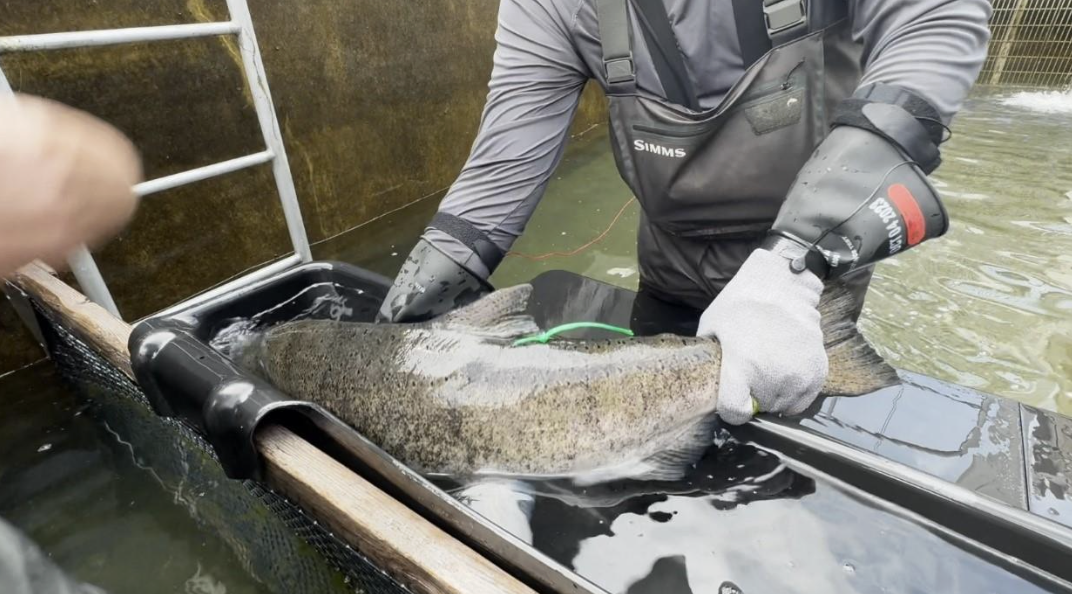
The effort to trap and transport adult Chinook also ramped up last year, with more than 4,500 surplus hatchery Chinook provided by downstream facilities including Douglas PUD’s Wells Fish Hatchery and the Colville Tribe’s Chief Joseph Hatchery. This was a two-fold increase in transported fish compared to the previous year and about a ten-fold increase since the signing of the P2IP agreement in 2023. The program returned approximately 136 adult Chinook from previous years’ juvenile hatchery releases, which is very encouraging and provides confidence that valid sample sizes for future adult tracking studies should be attainable.
The program documented another exciting “first” last year when the first known wild born adult to return from spawning in the blocked area in 2020 made its way up the Columbia River in July. Unfortunately, that fish could not be captured and transported back to its natal waters, which highlights the need for an adult trap and transport facility in the tailrace of Chief Joseph Dam. Accordingly, P2IP proponents, federal and state partners, and contractors have made good progress in planning, scoping, and beginning the design process for an interim collection in the Chief Joseph Dam tailrace.
Visit UCUT’s salmon reintroduction website and Lake Roosevelt Forum’s salmon reintroduction news stories to stay informed about future developments in these efforts, including cultural and educational releases.